
If certain meals leave you bloated, gassy or uncomfortable, the Low FODMAP diet is one structured way to find out which foods are responsible. This low FODMAP foods list for beginners covers what to put on your plate, what to swap for the usual trouble-makers, and how the diet works from start to finish.
Low FODMAP foods to start with: a simple list by food group
Portion size matters as much as the food itself. Many foods are low FODMAP in a modest serving and high FODMAP in a large one, so treat this list as a starting point and check amounts in the Monash University FODMAP Diet app, which is run by the research team that developed the diet and updates its testing over time.

Vegetables
- Carrots, parsnips and potatoes
- Cucumber, lettuce and spinach
- Tomatoes and red bell peppers
- Green beans and bok choy
- Zucchini (courgette) and eggplant in small to moderate servings
Vegetables that tend to cause trouble are onion, garlic, cauliflower, mushrooms, asparagus and artichokes. You will meet these again in the swaps section.
Fruit
- Strawberries, blueberries and raspberries (raspberries in a small handful)
- Oranges, mandarins and kiwi
- Grapes and pineapple
- Cantaloupe
- Firm, slightly underripe bananas
Ripe bananas contain more fermentable carbohydrate than firm ones, which is why ripeness changes the answer. Apples, pears, mangoes, watermelon, cherries and stone fruits such as peaches are higher in FODMAPs.
Grains and starches
- White, brown or basmati rice
- Rolled oats in a moderate bowl
- Quinoa and polenta
- Corn tortillas
- Traditionally made sourdough spelt bread
- Gluten-free bread, as long as the label has no inulin, honey, apple juice or large amounts of soy flour
Wheat, rye and barley are the main sources of fructans in a typical diet. Regular bread, pasta, couscous and many breakfast cereals contain them.
Protein foods
- Eggs
- Plain chicken, turkey, beef, pork and lamb
- Fresh or canned fish and shrimp
- Firm tofu, drained, and tempeh
Plain meat and fish contain no FODMAPs. Trouble comes from what is added: marinades, sausages, stock cubes, gravy and seasoning blends often contain onion or garlic.
Dairy and dairy alternatives
- Lactose-free milk and lactose-free yoghurt
- Hard cheeses such as cheddar, parmesan and Swiss
- Brie and camembert
- Butter, in ordinary amounts
- Soy milk made from soy protein (soy milk made from whole soybeans is higher in FODMAPs)
- Almond milk in modest servings
Nuts and seeds
- Walnuts, pecans, macadamias and peanuts
- Pumpkin seeds and sunflower seeds
- Almonds in a small handful of about ten
Cashews and pistachios are higher in FODMAPs and are best left out in the first phase.
Flavour and extras
- Olive oil and other plain oils
- Garlic-infused oil (explained below)
- Chives, the green tops of spring onions, ginger, basil, parsley, thyme and rosemary
- Lemon and lime juice
- Maple syrup and table sugar in small amounts
- Water, plain tea, peppermint tea and ginger tea
Easy swaps for common trigger foods like onion, garlic, wheat and milk
Swapping works better than going without. If you simply remove the onion and garlic from a recipe, it tastes flat. If you replace them with something that does the same job, you keep the meal enjoyable, which makes the diet easier to follow.
Onion
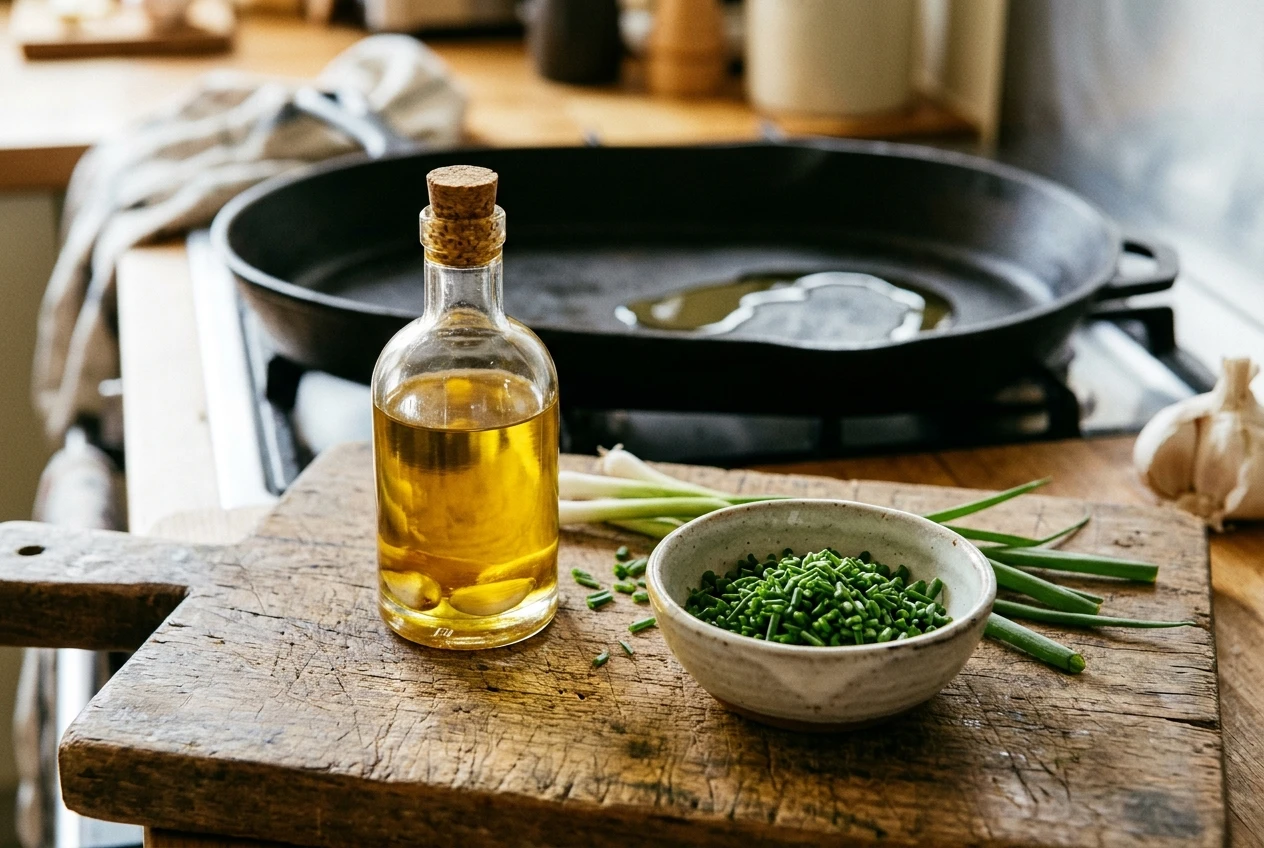
Onion is high in fructans, a type of FODMAP. The green tops of spring onions (scallions) and the green leaf of leeks are low in FODMAPs, so use those for a mild onion flavour. Chives work in the same way, especially stirred in at the end of cooking. Asafoetida powder, also called hing, gives a savoury, onion-like depth in a tiny pinch fried in oil. Check the label, because some brands are blended with wheat flour.
Garlic
Fructans do not dissolve in oil, so garlic-infused oil carries the flavour without the FODMAPs. Look for a commercially made one labelled suitable for a low FODMAP diet. Homemade garlic oil stored at room temperature can be a food safety risk, so it is best not to make your own unless you follow a safe method. Garlic chives and the green tops of spring onions are other options.
Wheat
Wheat is a source of fructans, and the issue for most people is the fructan content, not the gluten. That is why traditionally made sourdough spelt bread can be suitable even though it contains gluten, and why some gluten-free products still cause symptoms. Practical swaps include:
- Rice, rice noodles or gluten-free pasta in place of regular pasta
- Quinoa or polenta in place of couscous
- Corn tortillas in place of wheat wraps
- Oats or a low FODMAP cereal in place of wheat-based cereal
Milk and soft dairy
Lactose is the FODMAP in milk, soft fresh cheeses and some yoghurts. Lactose-free milk is real milk with the lactose already broken down, so it works in tea, porridge, baking and sauces. Hard, aged cheeses contain very little lactose, so cheddar and parmesan usually fit well.
Apples and other high-FODMAP fruit
Apples and pears contain excess fructose and sorbitol. Swap in oranges, kiwi, strawberries or blueberries. For a baked fruit dish, try firm banana, pineapple or a mix of berries.
Honey
Honey contains more fructose than glucose, which can be hard to absorb. Maple syrup is the usual swap.
Beans and lentils
Beans and lentils contain galacto-oligosaccharides (GOS). Canned lentils and chickpeas, rinsed well, can be low FODMAP in small servings, because some of the GOS leaches into the canning liquid. Check the exact amount in the app before adding them.
Hidden ingredients to check on labels
- Onion or garlic powder
- Inulin or chicory root fibre, common in protein bars and “high fibre” products
- Sorbitol, mannitol, xylitol and other ingredients ending in “-ol”, common in sugar-free gum and sweets
- High fructose corn syrup, agave and fruit juice concentrate
- “Natural flavours” in stocks and sauces, which can include onion or garlic
A sample day of low FODMAP eating
This is one example, not a prescription. Swap in any foods from the lists above that you enjoy.
Breakfast: A bowl of rolled oats cooked in lactose-free milk, topped with sliced strawberries and a few chopped walnuts. A cup of tea.
Lunch: Grilled chicken over rice with shredded carrot, cucumber, spinach and cherry tomatoes. Dress with olive oil, lemon juice, salt, pepper and chopped chives.
Snack: Lactose-free yoghurt with a handful of blueberries, or two rice cakes with peanut butter.
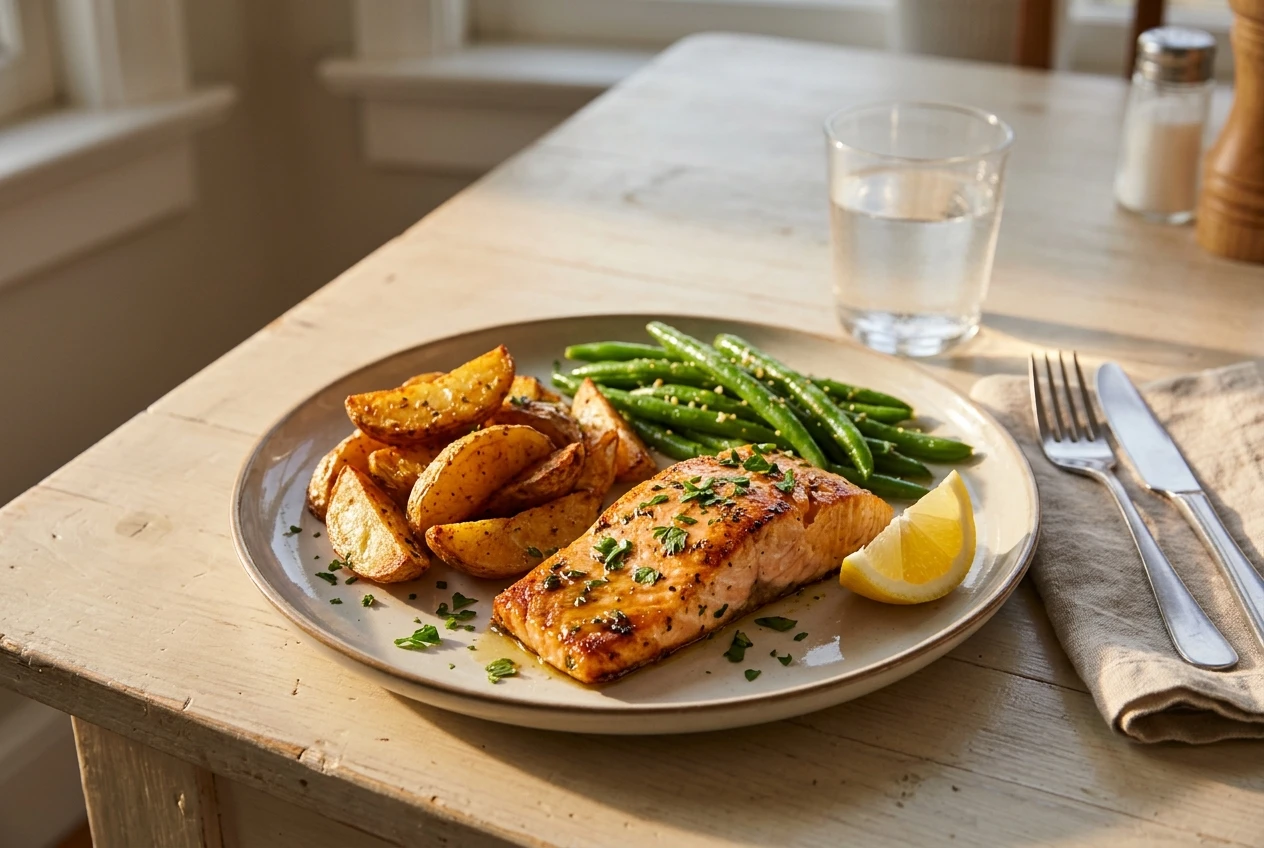
Dinner: Baked salmon with roasted potatoes and green beans. Toss the vegetables in garlic-infused oil and finish with parsley and lemon.
Drinks through the day: Water, peppermint tea or ginger tea.
Notice that each meal has a protein, a starch and a vegetable or fruit, and that no meal depends on onion or garlic. Eating enough matters during this diet. Cutting out many foods without replacing the calories can leave you tired and under-fuelled.
What FODMAPs actually are, in plain language
FODMAP stands for Fermentable Oligosaccharides, Disaccharides, Monosaccharides And Polyols. That is a long name for a group of short-chain carbohydrates and sugar alcohols found in many ordinary foods. The main types are:
- Fructans, found in wheat, onion and garlic
- Galacto-oligosaccharides (GOS), found in beans, lentils and chickpeas
- Lactose, the sugar in milk
- Excess fructose, found in honey, apples and mango
- Polyols (sorbitol and mannitol), found in some fruits, mushrooms, cauliflower and sugar-free products
In many people, these carbohydrates are only partly absorbed in the small intestine. The unabsorbed portion draws extra water into the gut and is then fermented by bacteria in the large intestine, which produces gas. In a sensitive gut, the extra water and gas can stretch the intestine and cause bloating, cramping, wind and changes in bowel habits.
FODMAPs are not harmful, and most people tolerate them without trouble. Many of them also feed the helpful bacteria in your gut, which is one reason the diet is not meant to be permanent. If you want to know more about those bacteria, the guide to understanding the microbiome for beginners explains them in simple terms.
The effect is also cumulative. A small serving of one high FODMAP food may be fine, but several in one meal can add up to a total your gut cannot manage. That is why people sometimes react to a meal even though no single ingredient seems to be the culprit.
The three phases: eliminate, reintroduce, personalise
The Low FODMAP diet is a short-term process of testing, in three stages. The aim is to end up eating as widely as your gut allows.
Phase 1: Elimination
You swap high FODMAP foods for low FODMAP ones for a limited period, usually two to six weeks. The point is to see whether your symptoms improve. If they do, FODMAPs are likely playing a part. If nothing changes after a few weeks of careful eating, this diet may not be the answer for you, and it is worth going back to your doctor rather than staying on it.
Keep this phase as short as it needs to be. It is not designed as a long-term way of eating.
Phase 2: Reintroduction
Once your symptoms have settled, you bring FODMAP groups back one at a time, in measured amounts, to see which ones cause a reaction. A common approach is to test one food from a single group over about three days, then return to the baseline low FODMAP diet for a few days before testing the next group. For example, you might test lactose with a glass of milk, then fructans with a slice of wheat bread.

Testing one thing at a time is the whole point. If you reintroduce several foods together and feel unwell, you will not know which one caused it. A food and symptom diary is very useful here.
Phase 3: Personalisation
You use what you learned to build your regular diet. Most people find that only some FODMAP groups bother them, and often only at larger amounts. You then eat everything you tolerate and limit only what you have found to be a trigger. Some people retest foods later, since tolerance can change over time.
Common beginner mistakes and how to avoid them
Staying in the elimination phase for too long. Restricting many foods for months can reduce the variety of fibre and plant foods in your diet. Plan your reintroduction from the start.
Ignoring portion sizes. A food listed as low FODMAP can become high in a bigger serving. Check amounts in the app, especially for avocado, oats, nuts, sweet potato and canned legumes.
Missing hidden ingredients. Stock cubes, sauces, sausages, flavoured crisps, dressings and seasoning mixes often contain onion or garlic. Read the label every time at first, then make a short list of products you have already checked.
Assuming gluten-free means low FODMAP. Some gluten-free breads and snacks contain inulin, honey, apple or pear juice, or high amounts of legume flour. Wheat itself is a fructan problem, not a gluten problem, so check the ingredient list.
Changing too many things at once. If you start the diet at the same time as a new supplement, a new exercise plan and a stressful week at work, it becomes hard to read your results. Keep other habits steady where you can.
Skipping the reintroduction phase. Without it, you will not learn what actually bothers you, and you may avoid foods you could happily eat.
Not tracking symptoms. Memory is unreliable for patterns that happen hours after a meal. Write down what you ate, when, and how you felt, including mood, sleep and stress.
Cutting out too much. The goal is to remove high FODMAP foods and replace them with low FODMAP ones, not to eat less. If you feel hungry, tired or have lost weight without trying, speak to a professional.
When to talk to a doctor or dietitian before you begin
Digestive symptoms have many possible causes, and bloating or gas does not by itself tell you which one applies to you. It is sensible to see a doctor before you start, particularly because some conditions need testing that the diet can interfere with.
Seek medical advice first if you have any of the following:
- Blood in your stool or black, tarry stools
- Unexplained weight loss
- Persistent vomiting or difficulty swallowing
- Fever or severe, ongoing abdominal pain
- Symptoms that wake you at night
- Signs of anaemia, such as unusual tiredness and pallor
- A family history of coeliac disease, inflammatory bowel disease or bowel cancer
- New digestive symptoms that begin after age 50
If you think you may have coeliac disease, ask about testing before you cut out wheat. The blood test works best while you are still eating gluten, so removing it first can give a misleading result.
A registered dietitian trained in the Low FODMAP diet can tailor the plan to your needs, check that your meals are nutritionally balanced and guide you through reintroduction. Professional support is especially worth considering if you are pregnant, have a history of disordered eating, are managing another condition such as diabetes, or are planning the diet for a child. The Low FODMAP diet can make eating feel more restrictive, and that is a good reason to have someone alongside you if you have struggled with food in the past.
This article is general education and not medical advice.
Where to go next for building a healthier gut
The Low FODMAP diet is one tool among several. Once you know which foods your gut handles well, you can look at the wider habits that support digestion, including fibre, sleep, stress and movement. The guide on how to improve gut health naturally is a good next read, and it fits well with the reintroduction phase, when you are rebuilding variety in your diet.
To make the process easier, keep a simple log of meals, symptoms and each reintroduction test. A plain notebook is enough. If you prefer a more structured option, a Low FODMAP food guide, cookbook or tracking journal can offer ready-made recipes and pages designed for logging, and it is an optional extra rather than a requirement.
Start with the foods in the list above, pick two or three meals from the sample day, and take it one week at a time.